
Eric Feigl-Ding Biography, Age, Height, Wife, Net Worth, Family
By Daniel Kim
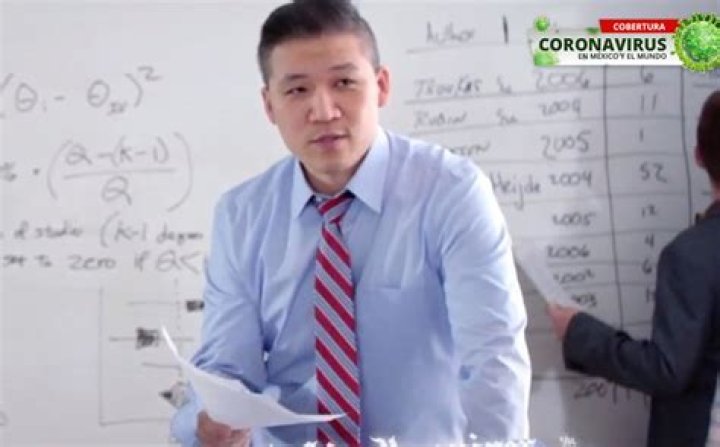
Age, Biography and Wiki
Eric Feigl-Ding (Eric Liang Ding) was born on 28 March, 1983 in Shanghai, China, is an American nutrition and public health scientist. Discover Eric Feigl-Ding's Biography, Age, Height, Physical Stats, Dating/Affairs, Family and career updates. Learn How rich is He in this year and how He spends money? Also learn how He earned most of networth at the age of 40 years old?
| Popular As | Eric Liang Ding |
| Occupation | N/A |
| Age | 40 years old |
| Zodiac Sign | Aries |
| Born | 28 March, 1983 |
| Birthday | 28 March |
| Birthplace | Shanghai, China |
| Nationality | China |
We recommend you to check the complete list of Famous People born on 28 March. He is a member of famous with the age 40 years old group.
Eric Feigl-Ding Height, Weight & Measurements
At 40 years old, Eric Feigl-Ding height not available right now. We will update Eric Feigl-Ding's Height, weight, Body Measurements, Eye Color, Hair Color, Shoe & Dress size soon as possible.
| Physical Status | |
|---|---|
| Height | Not Available |
| Weight | Not Available |
| Body Measurements | Not Available |
| Eye Color | Not Available |
| Hair Color | Not Available |
Who Is Eric Feigl-Ding's Wife?
His wife is Andrea Feigl-Ding
| Family | |
|---|---|
| Parents | Not Available |
| Wife | Andrea Feigl-Ding |
| Sibling | Not Available |
| Children | Not Available |
Eric Feigl-Ding Net Worth
His net worth has been growing significantly in 2022-2023. So, how much is Eric Feigl-Ding worth at the age of 40 years old? Eric Feigl-Ding’s income source is mostly from being a successful . He is from China. We have estimated Eric Feigl-Ding's net worth , money, salary, income, and assets.
| Net Worth in 2023 | $1 Million - $5 Million |
| Salary in 2023 | Under Review |
| Net Worth in 2022 | Pending |
| Salary in 2022 | Under Review |
| House | Not Available |
| Cars | Not Available |
| Source of Income |
Eric Feigl-Ding Social Network
Timeline
On January 20, 2020, Feigl-Ding went viral on micro blogging Twitter after expressing in vocal terms his worries relative to the 2019–20 Wuhan coronavirus outbreak virus' basic reproduction number (R0) of up to 3.8. Feigl-Ding compared the virus pandemic potential to the 1918 influenza pandemic which has an estimated R0 of 1.8 and which killed ~50 million people out of 2 billion, and called for WHO and CDC to preemptively declare public health emergency and monitor aggressively the situation. With the thread going viral, Feigl-Ding's appeals were criticized by his epidemiologist peers as alarmist and based on anecdotal data, by journalists as misleading and misinforming the public, and his announcements were reused to advance conspiracy theories about the virus. While Feigl-Ding deleted the tweets, the rapid development of the epidemic, first in China in January, then in Europe in February–March and in the United States in March, together with more studies on the virus, turned the perceptions of Feigl-Ding into that of an early messenger. Feigl-Ding was invited as a commentator on the pandemic by news media.
Feigl-Ding has published over 100 scientific papers, including major reports in the New England Journal of Medicine, Journal of the American Medical Association, PLoS Medicine, and The Lancet. As of February 2020, he had an h-index of 72.
Feigl-Ding was a candidate in the 2018 Democratic primary for Pennsylvania's 10th congressional district, as an advocate for public health, drug safety, and science. In late January 2020, Feigl-Ding's early alarm and call for COVID-19 preparedness went viral on Twitter. Feigl-Ding later commented on the COVID-19 pandemic and mitigation efforts in various media. His high visibility has been criticized by career epidemiologists, as Feigl-Ding's academic career and research is centered around nutrition and public health.
In 2018, Feigl-Ding ran in the Democratic primary for Pennsylvania's 10th congressional district. He campaigned on a progressive platform advocating science, healthcare for all, public health, and not taking corporate PAC money.
Feigl-Ding has received awards, including the Boston Chamber of Commerce's Outstanding Young Leader Award (2012), the American Heart Association's Scott Grundy Excellence Award (2015), the "Best of the American Heart Association" (2013, 2014, 2015), the Sigma Chi Mark V. Anderson Leadership Award (2016), the CUGH's Global Health Project of the Year Prize (2014), the Paul and Daisy Soros Fellowship for New Americans (2008). He is also a World Economic Forum Global Shaper. He was recognized by Craigslist founder Craig Newmark as one of “16 People and Organizations Changing the World in 2012”.
During the new Pennsylvania 10th district primary, his grassroots campaign outraised every opponent with $300,000 in just 10 weeks, including the Republican incumbent Scott Perry. He received the most national endorsements in the primary, and garnered the support of individuals and groups including: Rep. Jerry McNerney (D-CA), DNC Vice-Chair and Rep. Grace Meng (D-NY), Rep. Brian Baird (D-WA), 314 Action, Congressional Asian Pacific American Caucus's ASPIRE, Harrisburg City Council President Wanda Williams, United Brotherhood of Carpenters, International Union of Painters and Allied Trades, and the International Union of Operating Engineers.
Eric Liang Feigl-Ding (born March 28, 1983) is an American public health scientist who is currently a Visiting Scientist in the Department of Nutrition at the Harvard T.H. Chan School of Public Health. He is also the Chief Health Economist for Microclinic International. His research and advocacy have primarily focused on obesity reduction, cancer prevention, and drinking water safety. Feigl-Ding is a Paul and Daisy Soros Fellow, and a World Economic Forum Global Shaper.
Feigl-Ding's alert was used to hypothesize that such early reactiveness to weak signals, if it had occurred in the relevant governmental health leadership circles, could have prevented the pandemic. Following Feigl-Ding's call and his raising of the alarm in January, better responses by government authorities could have led millions to have prepared earlier and better to the pandemic, upgrading their hygiene, such as hand-washing and implementing social distancing measures. It was proposed that public policies and actions should be based on precautionary principles rather than waiting for incontestable and inarguable evidences or the tide of public pressure. Feigl-Ding's early pandemic alert was compared to the warnings since the 1970s about human-induced global warming, which in the 1980s had sufficiently strong early signals to have started actively planning for and responding to, reducing the disasters and costs of global warming during the 2000s and 2010s.
Related Archive
More in society and culture 
How much does it cost to be a member of the sausage Castle?

Why did dragovich betray Reznov? – Celebrity.fm – #1 Official Stars, Business & People Network, Wiki, Success story, Biography & Quotes